Energy Resilience and Micro-Grids in Ukraine: From Survival to Strategy
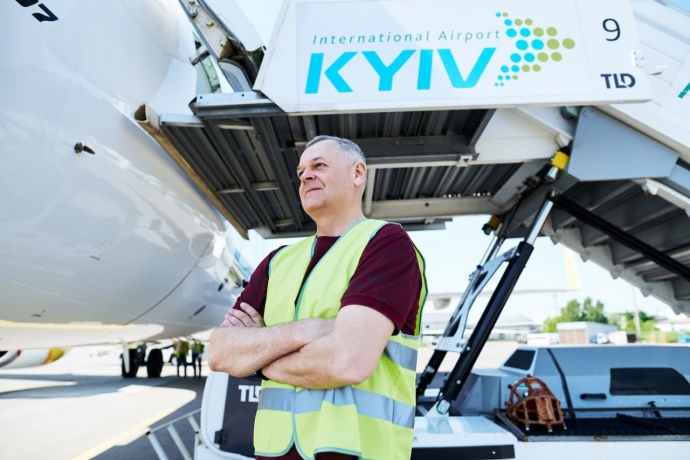
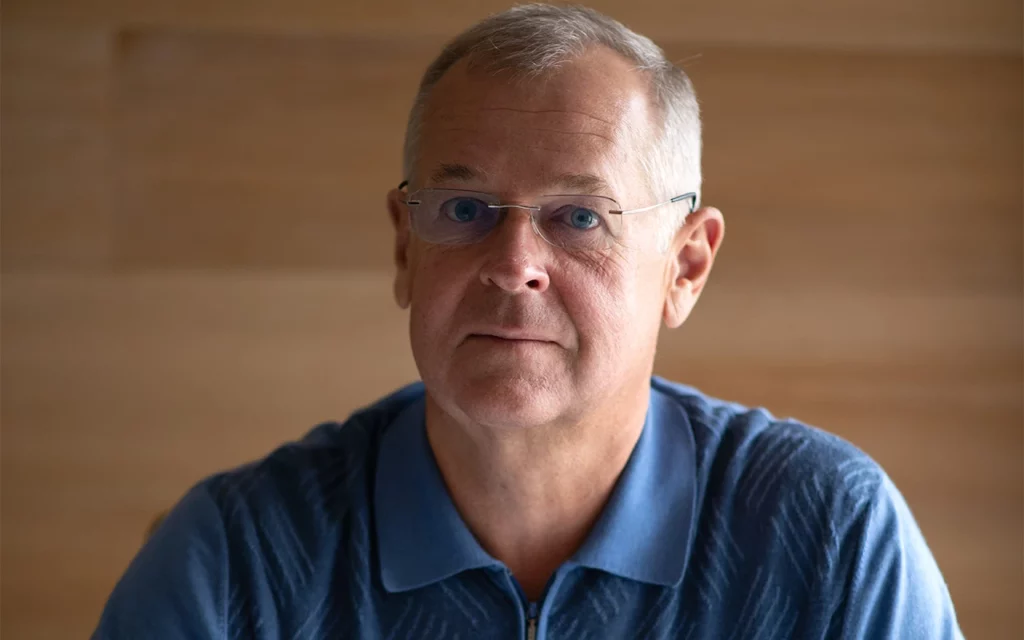
Author: Denys Kostrzhevskyi, Chairman of the Board of Directors of Kyiv International Airport, expert in public-private partnerships.
I vividly remember the winter of 2022–2023. Dark cities, prolonged power outages — sometimes for 12 hours or more — and thousands of critical facilities that were operating on the edge of shutdown. It was a winter when hospitals ran on diesel generators, schools used independent heating systems, and emergency warming centres became lifelines for hundreds of thousands of people.
It was during that winter that Ukraine began implementing something that had previously been discussed only by environmentalists: a shift from centralised to decentralised energy generation. It was not a planned reform — it was a matter of survival. But today this path is becoming a strategic necessity.
Micro-Grids: What They Are and Why They Save Lives
This is not merely a technology — it is a concept. A new level of energy security that literally saves lives in crisis conditions.
A micro-grid is a localised energy system that combines its own generation sources (solar panels, wind turbines, cogeneration units, diesel generators), energy storage systems and an intelligent control system.
Its main advantage lies in the ability to operate both within the national grid and independently from it.
In wartime this means something very concrete:
- surgeries in hospitals continue to operate;
- schools remain heated;
- pumping stations continue to supply water;
- communications remain active, even if an entire region is in blackout.
Since 2022 Ukraine has, in effect, created several hundred local micro-grids — sometimes planned, sometimes improvised — but all of them have become elements of the country’s energy defence.
International Experience with Decentralised Energy: Practical Lessons for Ukraine
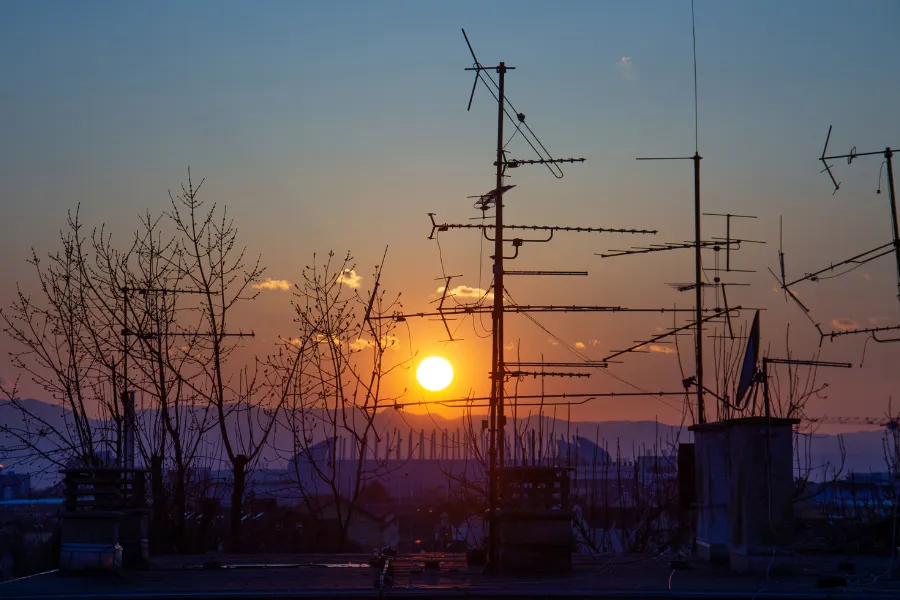
Across the world, communities and municipalities use micro-grids to strengthen energy resilience. These examples demonstrate workable models of autonomy, effective use of renewables, and integration of storage systems. They offer lessons and inspiration for applying similar approaches in Ukraine.
Simris, Sweden — community-level autonomy with renewables
The Simris micro-grid combines a 500 kW wind turbine, 440 kW of solar PV and an 800 kWh vanadium battery. The system is capable of operating entirely autonomously.
Feldheim, Germany — a self-sufficient energy cooperative
The village produces and consumes its own electricity and heat from solar, wind, biogas and biomass. The community owns its own local grid.
Groningen, Netherlands — a 10 MW municipal smart micro-grid
One of Europe’s largest urban micro-grid projects, combining renewable sources, battery systems and advanced control algorithms.
Vila Restauração, Amazonia (Brazil) — energy autonomy for an isolated settlement
A remote village receives 24/7 electricity from 325 kW of solar capacity, 829 kWh of batteries, biogas facilities and diesel backup.
These cases demonstrate that decentralised energy can be a cornerstone of security and development — something Ukraine now understands not conceptually, but practically.
Ukrainian Examples of Energy Resilience: Lessons from Practice
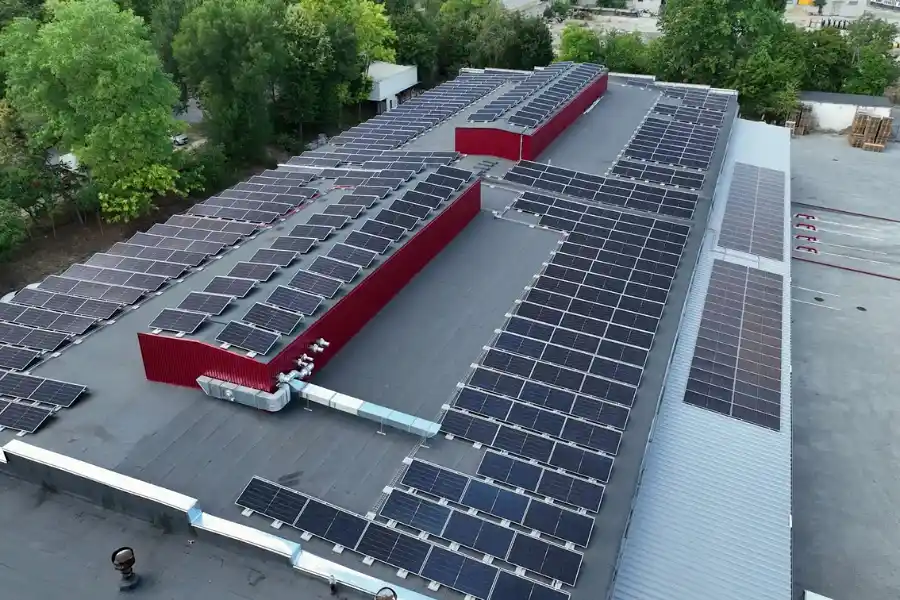
Here are only a few cases that demonstrate how local energy solutions help hospitals and communities remain operational under wartime conditions — supporting critical infrastructure and saving lives.
Brovary — solar micro-system for intensive care
24 kW of solar PV and 28.8 kWh of batteries maintain critical departments during blackouts.
Kharkiv — hospital autonomy near the front line
A trauma hospital received 52.55 kW of solar generation and 38.4 kWh of storage, enabling continuous operation during frequent power outages.
Kremenchuk — reinforcing resilience of the ICU hospital
69.6 kW of solar capacity on the rooftop reduces reliance on the city grid and supports emergency medical systems.
Vyshneve — reserve power supply for the municipal hospital
The Ukrainian Red Cross installed around 100 kW of solar PV and storage, ensuring up to 7 hours of autonomous operation.
Kryvyi Rih — hybrid solar power for a medical centre
A 30 kW solar array with 62.1 kWh of storage enables autonomous functioning amid unpredictable power supply.
Slobozhanske — energy protection for a clinic near the war zone
A system combining solar panels and storage reduces risk during attacks on energy infrastructure.
These are not abstract policies — they are real systems already functioning in Ukraine. Each demonstrates how localised energy autonomy enables essential services to continue in the most challenging conditions.
What Conclusions Can We Draw from Ukrainian Projects?
- We must urgently scale “solar hospitals.” Solar panels and battery systems are not about comfort — they are about saving patients’ lives.
- The role of NGOs and volunteer initiatives is undervalued — this must change.
- Autonomy must be calculated realistically — not symbolically. A 30–60 kWh battery is the minimum for critical surgery and ICU load.
- We must develop a sustainable financial model: grants alone are insufficient. Local budgets + international programmes + private partnerships = resilience.
- Micro-grids must become a priority for critical infrastructure: hospitals, heating shelters, pumping stations and emergency facilities.
From Improvisation to Strategy
I am convinced that micro-grids are not merely an emergency response to crisis — they are the foundation of Ukraine’s future energy system.
The Ministry of Energy is already working to establish a legal framework for micro-grids: the Strategy for Distributed Generation Development until 2035 includes legislative revisions to clearly define the status of distributed generation and storage systems.
Additionally, under the newly adopted National Energy and Climate Strategy, Ukraine plans mechanisms for connecting storage systems and decentralised sources.
These steps are an important beginning — they create regulatory footing for scaling micro-grids in Ukraine — but they are not yet a dedicated “micro-grid law.”
A real breakthrough will only be achieved when decision-makers — from the state leadership downward — recognise that micro-grids are not just a temporary wartime measure, but possibly the only workable solution for Ukraine’s energy security at the end of 2025 and beyond.
They must become a strategic direction for energy democracy, local resilience, and Ukraine’s reintegration into the European energy space.
We have already learned how to survive. Now it is time to move from improvisation to strategy — to build quickly, intelligently and without corruption.
Author: Denys Kostrzhevskyi, Chairman of the Board of Directors of Kyiv International Airport, expert in public-private partnership.